Filed
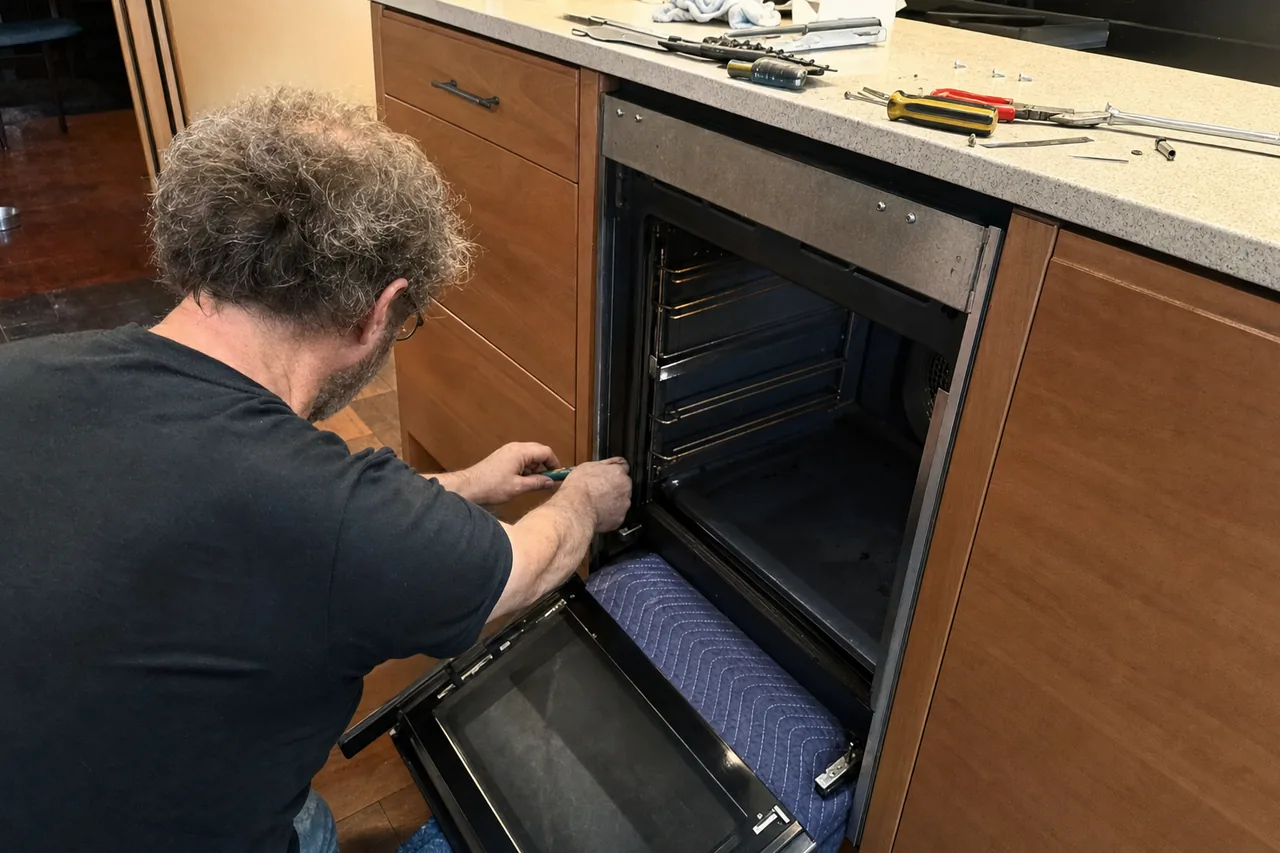
Established Orange Park kitchens — Pace Island, the older streets near the river, the first phases of the Fleming Island communities — were frequently designed around built-in cooking equipment from the start. The cabinet was built to the appliance, not the other way round.
Two or three decades later that is a constraint rather than a convenience. Cutout dimensions, required clearances and trim overlaps have all moved, and they have not all moved in the same direction. A replacement built-in is not guaranteed to occupy the hole the old one came out of.
Finding that out when the delivery truck is in the driveway is the expensive version of this discovery.
Four measurements, taken cold
Width of the opening, at three heights. Cabinet faces are not always parallel. Measure at the top, the middle and the bottom of the cutout and use the smallest figure, not the average.
Height of the opening, at both sides. Same reasoning. On a double oven cutout this is where most surprises live, because the required height for a given capacity has changed more than the width has.
Depth from the face of the cabinet to the back wall. Then check what is in that depth. Gas stubs, junction boxes and conduit all eat into it, and a unit that fits the cutout on paper can still stand proud because the supply behind it will not compress.
Position of the services inside the opening. Photograph it. Where the electrical box or gas connection sits vertically and horizontally decides whether a new unit can be pushed home at all.
The things people forget
Trim overlap is not the same as cutout size. Some appliances hide a generous margin of surrounding cabinet and some sit nearly flush, so a slightly oversized cutout may or may not be visible afterwards.
Rear and side clearances matter more than they used to, because more of these appliances cool themselves actively. An induction cooktop with a drawer stack retrofitted underneath it will drop zones under sustained high power — that is thermal protection, not a fault, and it will do the same thing to a brand new replacement.
Countertop material decides whether the cooktop aperture can be adjusted at all. Laminate is a morning. Stone is a fabricator, a template and a schedule.
Circuits are the last one. Older kitchens were wired for a lighter load than the equipment now sitting in them. A built-in oven, a cooktop and a warming drawer each want their own correctly sized supply, and an appliance being fed badly produces symptoms that look internal — zones dropping out, elements cycling oddly when other loads run.
When repair beats replacement here
More often than in a newer house, and for reasons that have nothing to do with the appliance.
If the existing unit is repairable, the job stays inside the appliance. If it is replaced and the opening does not match, the job now involves a cabinet maker, possibly a countertop fabricator, and possibly an electrician. The cost of the appliance stops being the main number.
That comparison gets made out loud during the diagnostic, with the measurements already taken, before anybody is asked to decide anything. A written estimate follows either way.
What actually retires these appliances
The equipment in these kitchens is not being retired by any one dramatic failure. It goes for three ordinary reasons: age, where hinges relax, gaskets harden and original electrodes stop holding a gap; storm-damaged electronics, which in this county means the cumulative effect of brief outages and the sag on recovery rather than a strike; and remodels that changed what the kitchen was asked to do, usually by putting a wider or hotter cooking surface under ventilation that was sized for the last one.
Only the third of those has anything to do with the opening — and it is the one most likely to turn a repair into a carpentry project, which is why the measurements come first.