The repair held up and the diagnosis was explained clearly, so no argument there. My complaint is the booking. I was moved twice before anyone reached the house, and nobody told me until I chased it.
Ruthann O.2026-03-19
Almost every fault on this equipment is worth repairing, and the reason is arithmetic rather than loyalty. The dearest repair on this book is $1,100. The cheapest comparable replacement starts at $5,200, appliance only.
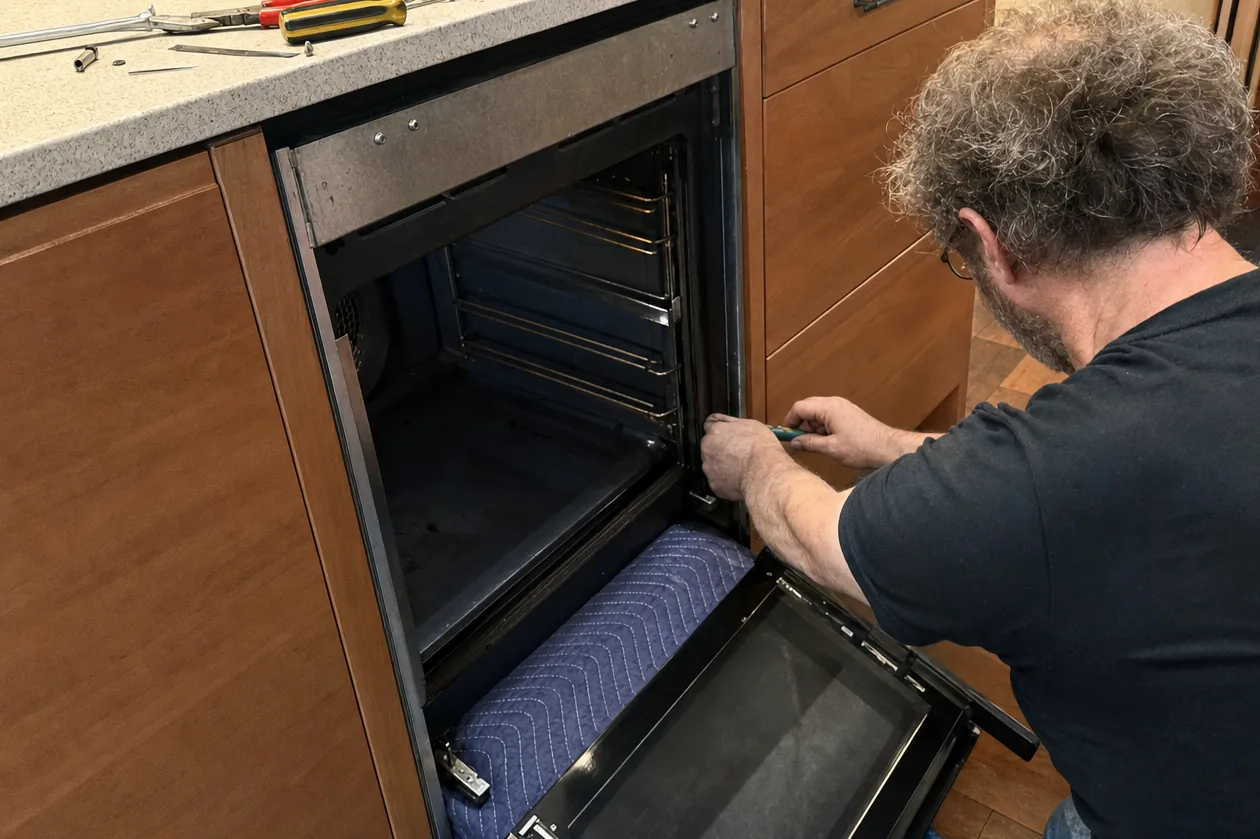
The rule most people arrive holding is the 50 percent rule: if the repair costs more than half of a comparable new appliance, buy the new one. It is a sound rule. It was written for equipment that costs a few hundred dollars to replace, and applying it honestly to built-in cooking equipment gives an answer most people do not expect.
Half of the cheapest replacement in the second table below is $2,600. Nothing on this shop's book reaches it. The whole book runs $180 to $1,100, parts and labor together for a finished repair, which puts the dearest repair quoted here at roughly 21 percent of the cheapest thing you could put in the hole the old unit came out of, and the cheapest at about 3 percent.
That gap is not an argument for repairing everything. It is the reason the decision is almost never settled by price alone on this equipment, and why the questions further down are about parts supply and cutouts instead.
Four things, in roughly this order. The first is which component turns out to be at fault: oven thermostat or temperature sensor sits at $180–$550, control board or touch panel at $470–$1,100, and the distance between those two is the whole spread of the book. The second is whether the part travels on the van. Staying with one manufacturer means the common ignition, sensor and thermal parts usually do, and a part that has to be ordered adds a fitting visit rather than a second diagnostic.
The third is whether the fault is one fault. A drifting oven and a dead igniter on the same range are two repairs and one visit fee, not two visits. The fourth is what caused it: a component that failed on its own is a part swap, while a component starved by a supply fault upstream will fail again in a month if the upstream fault is not found first. That last one is why the control board is checked last, not first.
When the appliance has been through a fire or a flood and the insulation is compromised. When the control and its sensor loom are both obsolete and no supply exists. When a kitchen is being rebuilt anyway and the opening is changing regardless. And when the unit is still inside the manufacturer's own coverage period — in that case call the manufacturer before anyone else, because that route should cost you nothing.
Outside those cases, a repair on Wolf cooking equipment wins on the numbers, and it keeps a unit that was specified for its opening in the opening it was specified for.
$80 flat diagnostic. Credited toward the repair when you approve the work. One fee per visit, not per appliance fault. You get a written estimate before any part is ordered or any labor is billed. It buys the answer to exactly this question: which band the fault belongs in, whether the part exists, and whether the arithmetic above still holds for your appliance. 90 days on labor, 365 days on parts. Genuine OEM parts only.
The full book sits on pricing, the terms on warranty, and the rest of what callers ask on the questions page.
The book above the line and the replacement cost below it. A band is parts and labor for a finished repair; the replacement figures are the appliance alone, which is the comparison the 50 percent rule is actually asking you to make.
$80 Flat $80 diagnostic covering the visit and the full diagnostic sequence, credited toward the repair once you approve the work.
| Repair | Parts and labor |
|---|---|
| Igniter or spark module replacement | $210–$530 |
| Burner valve or orifice service | $220–$680 |
| Oven thermostat or temperature sensor | $180–$550 |
| Convection fan or motor | $270–$710 |
| Control board or touch panel | $470–$1,100 |
| Door hinge, glass or seal | $180–$710 |
| Diagnostic visit | $80 |
Bands, not quotes. 90 days on labor, 365 days on parts. Genuine OEM parts only.
| Replacing it instead | Appliance only |
|---|---|
| Wall oven or built-in oven, the usual repair-or-replace comparison | $5,200–$10,500 |
| Dual-fuel or gas range, 36 inch and up | $8,500–$16,500 |
A repair that clears the top band is still well under the cheapest replacement in that table, and a replacement drags delivery, installation, ventilation and often cabinetry behind it. That arithmetic is why the estimate is written down before a part is ordered.
4.9
out of 5 across 82 customer reviews of this shop. Each one below is a single call, in the words of the person who paid for it.
The repair held up and the diagnosis was explained clearly, so no argument there. My complaint is the booking. I was moved twice before anyone reached the house, and nobody told me until I chased it.
Ruthann O.2026-03-19
The descale prompt came back within a week of my running one. He explained what the local water does to a boiler, cleaned it properly instead of just clearing the message, and the prompt has stayed away.
Clementine R.2026-06-11
The cooling fan carried on running for hours after the oven was off. He traced it to a sensor reading high rather than a stuck relay, changed it, and the fan now stops a few minutes after the door is opened.
Theodora Z.2026-08-31